Donald Trump’s recent wave of pardons for allies involved in the 2020 election scheme raises questions about presidential power and accountability.
Story Snapshot
- Trump issued pardons to high-profile allies involved in the 2020 election subversion efforts.
- The pardons are largely symbolic, as they do not cover state charges.
- Pardons framed as “national reconciliation,” yet their legal impact is limited.
- State-level prosecutions continue, unaffected by presidential clemency.
Trump’s Unprecedented Pardons
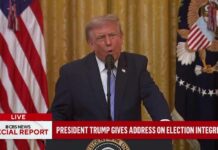
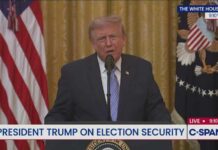
On November 7, 2025, Donald Trump issued pardons to 77 individuals, including Rudy Giuliani, Sidney Powell, and others associated with the 2020 election subversion efforts. These pardons are unprecedented in their scope, covering actions related to the creation of alternate elector slates and claims of election fraud. While these pardons aim to protect Trump’s allies from federal charges, they do not absolve them from state-level prosecutions, where the bulk of legal jeopardy lies.
The pardons are framed as an act of “national reconciliation,” according to Trump. Critics, however, view them as symbolic gestures with limited practical effect, as most recipients face state charges beyond the reach of presidential pardon power. The act raises critical questions about the use of presidential clemency and its implications for future legal strategies and political maneuvers.
Background and Context
The backdrop to these pardons is the contentious aftermath of the 2020 U.S. presidential election. Following his defeat, Trump and his legal team, including Giuliani and Powell, promoted unfounded claims of voter fraud. They coordinated efforts to submit alternate slates of electors in key states, seeking to overturn the certified election results. Despite numerous legal challenges, their claims were dismissed in court, leading to state and federal investigations into the so-called “fake elector” scheme.
These state-level investigations culminated in indictments in Georgia, Arizona, Nevada, and Michigan. Trump and 18 others were notably indicted in Georgia for racketeering related to election interference. The pardons, therefore, do not shield the recipients from these ongoing state prosecutions, highlighting the limited reach of presidential clemency in this context.
The Impact of Pardons
In the short term, Trump’s pardons offer legal and reputational relief to those involved at the federal level. However, the long-term implications are more profound, setting a precedent for the use of presidential clemency in cases related to election conduct. Legal scholars and experts warn that such moves could undermine accountability for election-related misconduct and embolden future attempts to subvert democratic processes.
The pardons may also deepen political polarization, with Trump supporters viewing them as necessary corrections of perceived injustices, while opponents see them as a self-serving attempt to shield allies from accountability. The pardons’ symbolic nature raises questions about the balance of power between federal and state authorities in prosecuting election-related crimes.
Expert and Public Reactions
Legal experts and political commentators have expressed concerns about the pardons’ implications for democracy and the rule of law. Some argue that the pardons could weaken the integrity of democratic institutions by setting a precedent for future abuses of power. Others highlight the tension between federal and state jurisdictions in prosecuting election-related offenses, underscoring the need for clearer legal frameworks.
Public reactions are mixed, with Trump’s base likely energized by the move, while critics decry it as an abuse of executive power. The pardons underscore the ongoing political and legal battles surrounding election integrity and accountability, shaping the landscape for future political and legal strategies in the United States.