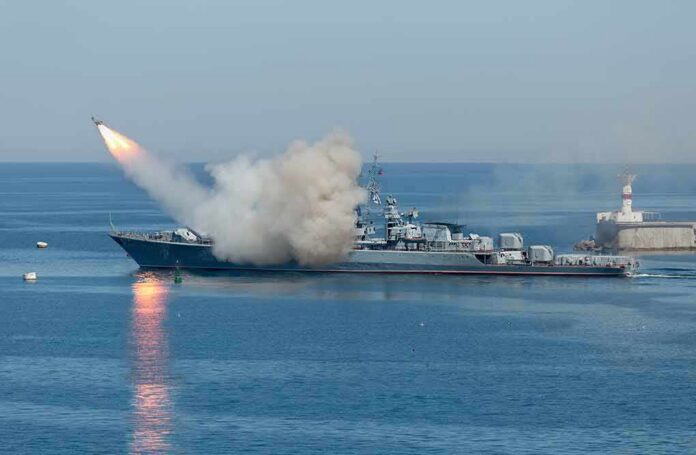
U.S. forces hit Iranian military sites around the Strait of Hormuz to protect shipping and punish recent attacks, marking another sharp turn toward open confrontation.
Story Highlights
- CENTCOM said strikes targeted Iranian launchers, drone depots, and coastal defenses tied to threats against ships.
- Operations focused on military infrastructure, including sites on Greater Tunb Island and near Bandar Abbas.
- U.S. officials framed the action as protecting commercial vessels and reducing immediate maritime threats.
- Iran called the attacks “aggressive,” while shipping through the corridor has slowed and remains contested.
What The U.S. Military Says It Hit And Why It Matters
U.S. Central Command said American forces struck Iranian military operations centers, drone storage sites, aircraft hangars, and logistics hubs to weaken Iran’s ability to threaten commercial ships in the Strait of Hormuz. The command also described attacks on coastal defense systems and cruise missile storage and launch sites on Greater Tunb Island, with additional targets near Bandar Abbas linked to the Islamic Revolutionary Guard Corps. Officials framed the mission as defensive and focused on keeping sea lanes open for civilian vessels.
CENTCOM messages emphasized a limited target set aimed at military infrastructure, not civilian sites. Reports described repeated, time-bound strike waves hitting maritime capabilities, surveillance, and air defense assets. U.S. officials also said forces acted to reduce “immediate” risks, including preparations to launch rockets carrying sea mines and to clear mine threats in the area, though the public record does not include declassified imagery to verify those claims. The Pentagon’s stated aim is to prevent attacks on mariners and keep oil and goods moving.
Competing Claims Over Shipping And Escalation Risks
Iran’s foreign ministry condemned the U.S. strikes as “aggressive” and labeled them illegal. An Iranian maritime authority asserted at one point that passage through the strait was not possible due to U.S. military actions. At the same time, independent shipping data and industry reports show traffic has slowed since the conflict expanded, even as some U.S. statements say transit continued under protection operations. These mixed signals reflect a tense standoff where both sides claim to defend navigation while accusing the other of endangering it.
Wire coverage shows the strikes unfolded across multiple nights, which can blur which action triggered which response. Reuters reported the U.S. completed its twelfth straight night of strikes, a pace that can harden fear of a wider war if miscalculation occurs. The pattern follows earlier nights when U.S. forces renewed strikes after American casualties and after threats against ships. Each round adds pressure on regional partners and raises insurance costs, even if the tactical effects degrade launchers or mine deployment sites for a time.
The Evidence Gap And What Americans Deserve To See Next
The public record relies heavily on military statements and unnamed officials. The government has not released declassified intelligence that shows launchers moments from firing or sea mines being staged. There is no public legal memo explaining the strike authority and proportionality review. Those gaps make it easy for partisans to cherry-pick claims and for the public to lose trust. Clearer proof would help citizens judge necessity, scale, and risk in a vital waterway.
Military action in the Middle East today as U-S forces have struck Iranian rocket launchers along the Strait of Hormuz. NewsNation's Hannah Brandt:: “This is the first such strike that we know about from the US in several weeks. A US official did confirm this information to me,… pic.twitter.com/2v2s46LQSD
— Worldwide News Network (@WorldwideNNX) August 31, 2026
Congress could press for three releases: a formal legal basis, pre- and post-strike assessments, and sanitized intelligence that confirms the threat timeline. Independent reviews of ship-tracking data and insurance pricing before and after the strikes could test whether risk actually fell. These steps would not expose sources and methods if done carefully. They would, however, honor a basic principle both left and right share: government should show its work when it uses force abroad.
Sources:
facebook.com, reuters.com, bbc.com, theguardian.com
© patriotpostnews.com 2026. All rights reserved.