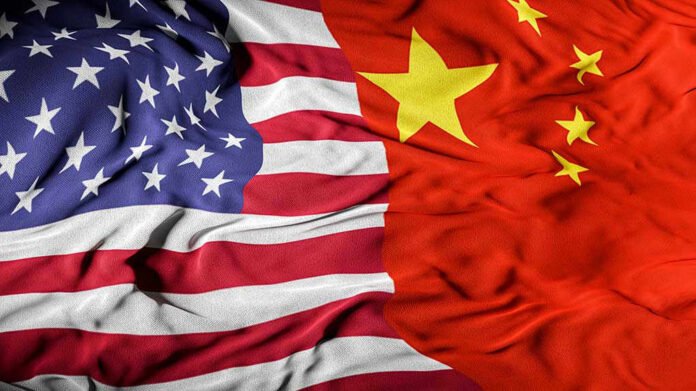
China’s first-ever blocking order openly defies U.S. sanctions, shielding five domestic firms from penalties over Iranian oil deals and exposing cracks in America’s global enforcement power amid rising superpower tensions.
Story Snapshot
- China’s Ministry of Commerce issued its inaugural prohibition order on May 2, 2026, banning recognition or compliance with U.S. sanctions on five petrochemical companies linked to Iranian oil.
- The order invokes the 2021 Blocking Rules, marking a rare enforcement step in a pattern of countermeasures against U.S. extraterritorial measures.
- Targeted firms include Hengli Petrochemical (Dalian), Shandong Shouguang Luqing, and others hit with U.S. asset freezes and transaction bans.
- Beijing frames the action as defensive, protecting national interests while challenging unilateral U.S. policies lacking UN backing.
- This escalation highlights bipartisan U.S. frustrations with foreign defiance that undermines efforts to curb illicit oil trade and enforce economic leverage.
China Activates Blocking Order Against U.S. Sanctions
On May 2, 2026, China’s Ministry of Commerce (MOFCOM) released a prohibition order under the 2021 Rules on Counteracting Unjustified Extraterritorial Application of Foreign Legislation and Other Measures. The directive explicitly bars Chinese entities from recognizing, enforcing, or complying with U.S. sanctions targeting five petrochemical firms. These companies face U.S. Treasury designations for alleged Iranian petroleum transactions, including placement on the Specially Designated Nationals (SDN) List with asset freezes and transaction prohibitions. MOFCOM’s assessment deemed the U.S. actions improper extraterritorial application, effective immediately upon publication.
China says it is not bound by US sanctions and will not follow them. Its commerce ministry banned Chinese companies from obeying the penalties on five refiners buying Iranian oil. This protects local businesses and keeps trade with Iran. The US sees it as defiance, raising… pic.twitter.com/pjczqYDr23
— HojeNaGazetaDoMundoMilitar (@HojenoGMM) May 2, 2026
MOFCOM grounded the order in China’s National Security Law, Anti-Foreign Sanctions Law, and the Blocking Rules framework. A ministry spokesperson emphasized opposition to unilateral sanctions without UN authorization or international law basis. The move safeguards sovereignty, security, and development interests while protecting Chinese citizens and organizations from foreign restrictions on third-country trade.
Targeted Firms and U.S. Sanctions Background
The five affected companies are Hengli Petrochemical (Dalian) Refining Co., Ltd., Shandong Shouguang Luqing Petrochemical Co., Ltd., Shandong Jincheng Petrochemical Group Co., Ltd., Hebei Xinhai Chemical Group Co., Ltd., and Shandong Shengxing Chemical Co., Ltd. U.S. sanctions under Executive Orders 13902 and 13846 cite their involvement in Iranian oil purchases since 2025. These measures restrict normal economic activities between Chinese firms and Iran or its partners, prompting Beijing’s response. No counter-evidence disputes the order’s issuance or scope across state media and international reports.
Chinese state outlets like Xinhua and Global Times reported the ban as a lawful defense of international trade order. The order warns that foreign banks operating in China, such as HSBC branches, risk violations if they enforce U.S. SDN restrictions by denying services to these firms. This pits compliance with U.S. rules against Chinese law, complicating global finance for multinational entities.
Broader Context of Sanctions Escalation
This marks China’s first formal blocking order since the 2021 rules, though Beijing has issued warnings in 15-20% of similar U.S. designations involving Iran or Russia trade. Recent State Council decrees in April 2026 expanded countermeasures, including Provisions on Countering Foreign Unlawful Extraterritorial Jurisdiction, enabling entity-specific prohibitive orders with fines for non-compliance. Analysts view it as part of a tit-for-tat dynamic, timed amid U.S.-China frictions over energy security and supply chains.
Americans across the political spectrum share concerns over federal overreach abroad mirroring domestic elite failures at home. Conservatives decry weakened America First leverage as adversaries like China prioritize energy needs over U.S. dictates, fueling inflation via unchecked global oil flows. Liberals worry about escalating divides, where sanctions wars exacerbate inequality without curbing real threats. Both sides see a government more focused on power plays than delivering affordable energy and economic stability for working families pursuing the American Dream.
The order underscores eroding U.S. unilateral influence, as China secures Iranian crude—a key customer despite sanctions—potentially stabilizing its economy at Washington’s expense. Multinationals now navigate dual legal traps: U.S. penalties for ignoring SDN lists versus Chinese fines for Blocking Rules breaches. This reality fuels widespread distrust in institutions unable to protect national interests without endless foreign entanglements.
Sources:
‘Defensive and justified’: China invokes first-ever ‘blocking order …