

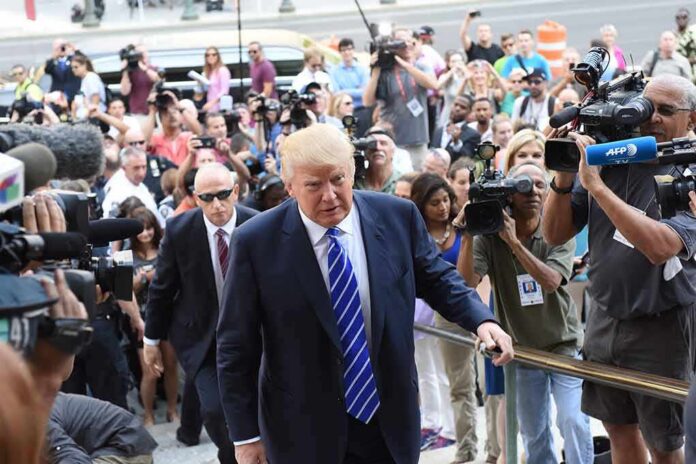
President Trump and Philippine President Ferdinand Marcos Jr. held scheduled bilateral talks and a working lunch in Manila during the ASEAN summit window, underscoring tighter U.S.–Philippine coordination amid rising regional tensions.
Story Snapshot
- Trump traveled to Manila and met Marcos for bilateral talks and a lunch at the presidential palace.
- The Philippine government confirmed Trump’s attendance at the November 16–18 ASEAN summit in Manila.
- Philippine media documented Trump’s arrival on November 17 ahead of the Marcos meeting.
- The encounter fit into an ASEAN program focused on security and economic ties.
What Happened in Manila
Reuters and local media reported that President Trump arrived in Manila on November 17 and was scheduled to meet President Marcos Jr. on November 18 for bilateral talks and a working lunch at the presidential palace. The meeting came as part of an ASEAN summit program hosted in the capital. Reports also noted that Trump’s Asia swing included onward travel to China after Manila. These details were confirmed across multiple outlets tracking the official agenda and travel timeline.
The Philippine Presidential Communications Office said in October that Trump would attend the ASEAN summit in Manila from November 16 to 18. That statement set the stage for a leader-level encounter with Marcos during the summit period. By summit week, Philippine media further documented Trump’s touchdown at Ninoy Aquino International Airport, placing him in Manila ahead of the scheduled bilateral engagement at Malacañang Palace, the official residence and workplace of the Philippine president.
Why This Meeting Matters
The United States and the Philippines are treaty allies with shared security concerns in the South China Sea. A leader meeting during ASEAN signaled that both sides want closer coordination on defense, trade, and supply chains. Associated Press coverage framed the Manila stop within wider regional diplomacy, with ASEAN leaders focused on conflict risks and economic stability. The optics of a palace lunch and red-carpet welcome underscored the Philippines’ effort to keep strong ties with Washington amid great-power competition in Asia.
For many Americans, the stakes feel concrete. Shipping routes, energy prices, and food costs link back to what happens in Asia’s seas and factories. When leaders talk about sea lanes and investment, they are talking about whether stores stay stocked and prices stay steady at home. A firm U.S.–Philippine partnership can deter coercion, keep trade moving, and support American workers whose jobs depend on stable global demand. That is why a single bilateral meeting can carry outsized weight.
How the Schedule Took Shape
Philippine reporting cited the Department of Foreign Affairs saying Trump and Marcos would meet on the sidelines with bilateral engagements set for November 18. The schedule placed Trump’s arrival near the summit’s end, but local outlets said the timing would not disrupt closing events. The plan highlighted how ASEAN weeks often combine multilateral sessions with one-on-one leader meetings. These encounters let countries press specific goals, from defense cooperation to investment and jobs.
Philippine media also noted that Trump’s Manila stop was followed by travel to China. That sequence added to the meeting’s strategic tone. It showed that Washington and Manila aimed to align views before Trump’s next leg in a region where rivalries are sharp. The combination of ceremonial welcomes and working sessions suggested both symbolism and substance were in play. Such programming is common at major summits because it signals resolve while advancing practical deals.
What We Know — and What Is Still Unclear
The strongest reports confirm the trip, the summit setting, the planned palace venue, and the scheduled lunch and talks. They also place Trump’s arrival on November 17, with the meeting set for November 18. Some materials online mix dates or titles from other periods. That confusion does not change the core record of a planned leader meeting during the summit window, but official post-meeting readouts would provide the clearest details on outcomes and commitments, if any were announced.
READ: US President Donald Trump announces on Wednesday (Nov. 18, 2026) in his Truth Social account a "new and completely different" trade deal with the Philippines after meeting President Ferdinand R. Marcos Jr. bilaterally in Manila.
The US leader then described Marcos as a… pic.twitter.com/qXGHTiV5BL
— Philippine News Agency (@pnagovph) November 18, 2026
Americans across the political spectrum share a worry that distant meetings feel detached from daily life. Yet meetings like this can shape whether the United States can prevent conflict, protect trade, and keep inflation pressures in check. Leaders cannot fix everything at a lunch, and citizens rightly demand results. But when allies talk face to face, they often unlock small steps that matter later, from joint patrols and disaster aid to investment that builds real jobs at home.
Sources:
youtube.com, pbs.org, philstar.com, pco.gov.ph, bnd.com
© patriotpostnews.com 2026. All rights reserved.