

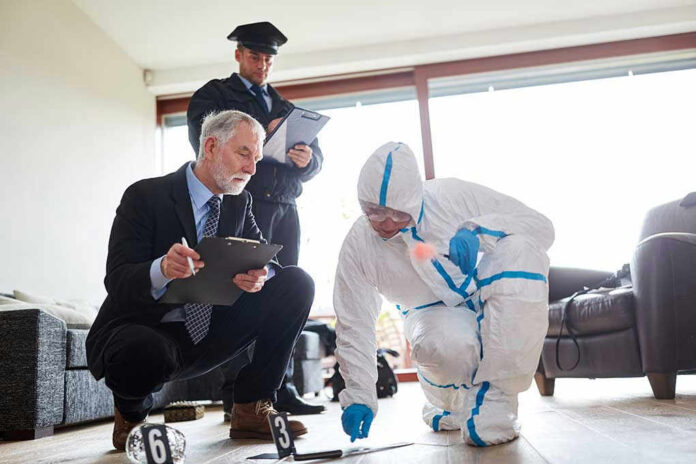
DNA found on a cigarette butt solved a 20-year-old murder mystery, illuminating the power of forensic innovation.
Story Overview
- DNA on cigarette butt cracks a decades-old cold case.
- Detective ingenuity and forensic technology join forces.
- Innovative evidence collection revives stalled investigations.
- Forensic science advancements bring justice to a victim’s family.
Unraveling a Cold Case Mystery
The murder of Terry Brooks in 1984 seemed destined to remain unsolved. Evidence at the restaurant crime scene, including a plastic bag, hair strands, and a knife, initially provided no leads. The case went cold, and a $5,000 reward failed to draw out information. It wasn’t until the summer of 1998 that Detective Nelson Whitney revisited the case, driven by a determination to find justice for the victim whose life was cut tragically short.
Re-examining over 80 pieces of evidence, Whitney, with the help of criminalist Diane Marshall, uncovered a breakthrough. DNA technology had advanced, offering new possibilities. Among the evidence, cigarette butts discarded by the suspect contained crucial genetic information. This creative forensic approach sidestepped legal hurdles, allowing investigators to piece together the puzzle of Terry Brooks’s murder.
Innovative Forensic Techniques
The use of cigarette butts as a DNA source highlights the evolution of forensic science. In a time when direct DNA collection was legally complex without probable cause, Marshall’s strategy to gather evidence from discarded items marked a turning point. This endeavor not only enabled the extraction of a suspect’s DNA but also established a precedent for utilizing everyday objects in criminal investigations. Such innovation underscored the importance of keeping forensic methods in step with technological progress.
Three separate pieces of evidence yielded the same unknown male DNA profile, offering a compelling narrative of the murder’s circumstances. This corroboration fortified the case against the suspect, linking them indisputably to the crime scene. For law enforcement, it reinforced the value of revisiting cold cases with a fresh perspective and updated techniques.
A Collaborative Approach to Justice
The successful resolution of this case was not only a triumph of technology but also of interdisciplinary collaboration. Detective Whitney’s reassignment of resources and exploration of new investigative strategies demonstrated the critical role of leadership in cold case investigations. The involvement of the Academy Group’s behavioral profilers added another layer, providing psychological insights that complemented the forensic evidence.
Chief Deputy District Attorney Lorie Markle ensured the legal integrity of the proceedings, focusing on admissible evidence and strategic prosecution. This case exemplifies the synergy between legal, investigative, and scientific disciplines, showcasing how each facet contributes to the overarching goal of justice.
Implications for the Future
The resolution of Terry Brooks’s murder after 14 years had profound implications. For her family, it provided long-awaited closure and a sense of justice. The community, once overshadowed by the unsolved crime, could begin to heal. For the field of forensic science, this case became a benchmark, illustrating the potential of DNA analysis from unconventional sources.
The broader law enforcement community recognized the necessity of reassessing cold cases periodically. As forensic capabilities evolve, so too must investigative approaches. This case reinforced the idea that no lead is too small and no piece of evidence too insignificant. The world of forensic science continues to grow, and with it, the hope of solving the unsolved.
Sources:
The Vidocq Society Investigators Cracking the Terri Brooks Cold Case Through DNA and Profiling Essay