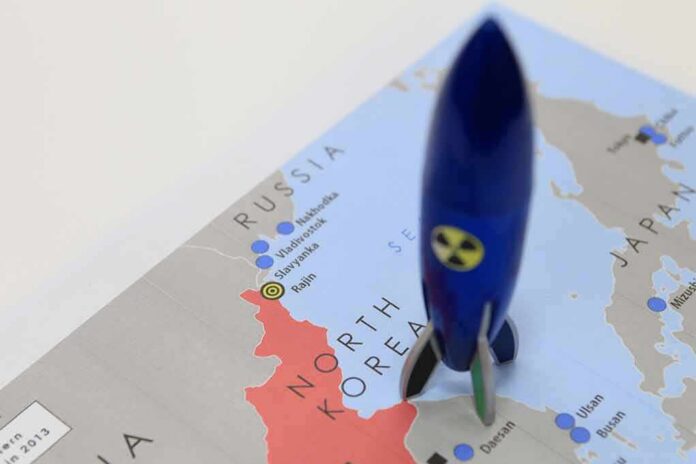
A string of United Nations findings and U.S. sanctions shows North Korean know-how flowing into Iran’s missile programs, raising fresh risks for American forces and allies.
Story Highlights
- United Nations reports describe North Korea-Iran ballistic missile cooperation in violation of sanctions.
- U.S. sanctions have repeatedly targeted networks tied to Iran and North Korea for missile-related transfers.
- Iran denies such cooperation, but experts say technical links span decades.
- The pattern fits a wider, hard-to-track trade in parts, technicians, and designs.
What New and Old Reports Say About the Tech Pipeline
Reuters reported that a confidential United Nations study found North Korea and Iran were “regularly exchanging ballistic missile technology,” including suspected transfers by air, in breach of sanctions. A later United Nations expert report, cited by Radio Free Europe/Radio Liberty, said the two resumed long-range missile cooperation in 2020 and moved critical parts that year. A United Nations panel track record shows North Korea exporting missile and nuclear technology using front firms and middlemen, with Iran named as a recipient.
China pushed back on the 2011 findings and even blocked public release at the United Nations, highlighting how great-power politics can bury details before the public sees them. That dynamic leaves citizens leaning on leaks and summaries instead of full documents. The result is a familiar cycle. Fresh tips point to parts, technicians, or designs on the move. Governments argue over what to disclose. Meanwhile, the missile programs keep advancing behind layers of cutouts and covert shipping.
Sanctions Trails That Map a Long Cooperation Arc
Washington has used sanctions to strike at this pipeline for decades. In 2000, the United States penalized firms in Iran and North Korea for missile technology transfers, naming specific entities on both sides. In 2017, the United States sanctioned 30 firms and people tied to moving sensitive items to Iran’s missile program and to violations involving Iran, North Korea, and Syria. The State Department also cited multiple entities under the Iran, North Korea, and Syria Nonproliferation Act, signaling continued concern about parts and know-how changing hands.
Policy groups and researchers say Iran’s missile growth drew on North Korean designs from the late 1980s onward, with Iran adapting and improving those systems over time. Interviews and reports describe a mix of early Scud transfers, mid-range systems, and shared engineering patterns that appear in Iranian models today. This history supports why new reports of resumed cooperation in 2020 caused alarm. If even small batches of advanced parts or machining help move, Iran can save years of trial and error.
Denials, Gaps, and Why the Pattern Still Matters
Iran’s Foreign Ministry has denied missile technology exchanges with North Korea, calling such claims unfounded and saying Iran’s scientists can work on their own. A Voice of America summary noted that a leaked version of one 2011 document did not show a direct nuclear link, even as missile ties drew scrutiny. Those points matter. They remind readers that not every charge becomes confirmed public record, and that Iran’s domestic capacity has grown on its own tracks, too.
According to briefings from South Korea's National Intelligence Service (NIS), intelligence agencies have found no evidence that North Korea has actively supplied Iran with new weapons or military materials during recent regional conflicts. https://t.co/aKeHIXOmdd pic.twitter.com/gvJoedYzxV
— Farnak (@Farnakyboy) August 21, 2026
Even with denials, the repeat signals from United Nations panels and sanctions actions outline a clear risk path. Parts and expertise that move through covert networks can jump-start range, accuracy, and survivability upgrades in Iran’s arsenal. That translates into more pressure on U.S. bases, shipping lanes, and partners. It also fuels public distrust at home. Many Americans see an insider game where elites hide the paperwork, while ordinary families live with the costs of war, higher prices, and a government that rarely levels with them.
Sources:
19fortyfive.com, jp.reuters.com, rferl.org, bbc.com, reuters.com, nknews.org, centerforsecuritypolicy.org, voanews.com, aljazeera.com, defensa.gob.es
© patriotpostnews.com 2026. All rights reserved.