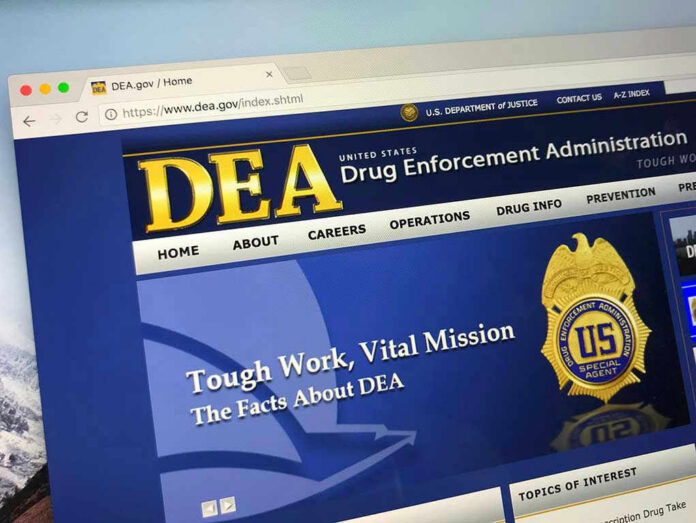
Federal investigators are now reviewing claims that drug agents let massive fentanyl loads move through New Mexico, raising hard questions about who protected the public and who protected the case file.
Story Snapshot
- The Justice Department opened a review of fentanyl-related investigations after whistleblower allegations in New Mexico.
- The Drug Enforcement Administration asked for oversight of its handling of the complaints and tactics.
- The Justice Department’s Office of Professional Responsibility previously found some non-seizure decisions reasonable and lawful.
- New Mexico’s attorney general sued for federal records, saying requests were wrongly denied.
What triggered the new federal review
The Justice Department Office of the Inspector General started a review into how federal agencies handled fentanyl investigations. The scope includes how teams weighed the risk to the public when they did not seize suspected drugs, who approved those choices, and how they documented them. The review follows public reporting and whistleblower claims tied to New Mexico operations. The Drug Enforcement Administration asked for oversight that also looks at how it handled a key whistleblower complaint.
Whistleblowers alleged that federal agents and prosecutors allowed suspected fentanyl shipments to keep moving in New Mexico to build larger conspiracy cases. One complaint, routed through the United States Office of Special Counsel, was sent to the Department of Justice for review in late 2023, showing the claims entered formal oversight channels. The Washington Post reported that the Drug Enforcement Administration asked the inspector general to review these claims after the initial coverage.
How prior oversight judged the tactic
The Justice Department’s Office of Professional Responsibility issued a 2024 summary about related allegations. The office said the department’s fentanyl guidance lets investigative teams use judgment during wiretap cases, with supervisors involved. The office found that, in the matters it reviewed, choices not to seize suspected drugs had adequate oversight, were reasonable under the circumstances, and did not break rules or create a specific public danger.
The Drug Enforcement Administration has rejected the claim that it “knowingly permitted” fentanyl to reach communities. The agency says the decisions at issue were lawful, reasonable for the situation, and aligned with department guidance. The agency also argues it is not possible to seize every shipment during complex cases, which often aim to identify higher-level suppliers before making arrests.
Why New Mexico officials are pressing for records
New Mexico Attorney General Raúl Torrez sued the United States Department of Justice to obtain records on the alleged fentanyl tactics. His office says federal officials wrongly denied earlier requests. The lawsuit seeks policies, emails, and reports to determine if federal actions led to more harm or broke internal rules. State leaders argue they need the facts to assess accountability and possible legal steps to protect communities hit hard by synthetic opioids.
Every seven minutes, fentanyl takes another American life.
Somebody's daughter. Somebody's dad. Somebody's best friend. On National Overdose Awareness Day, Empower Oversight remembers them and demands accountability.
Empower Oversight's client, DEA Special Agent David Howell,… pic.twitter.com/FkWz9TPOTS
— Empower Oversight (@EMPOWR_us) August 31, 2026
Members of New Mexico’s congressional delegation also pressed the Drug Enforcement Administration for answers. Lawmakers cited whistleblower claims that agents declined to interdict large quantities of fentanyl between 2023 and 2025 to try to dismantle bigger networks. Their letter asked for documents and a clear explanation of when and why agents are told to monitor rather than seize, and how supervisors weigh public-safety risks during those calls.
The core tension: case-building versus public safety
Federal drug work sometimes allows monitored deliveries or short delays in seizing contraband to reach higher targets. The key safeguards are strong supervision, documented risk balancing, and fast action when danger rises. The oversight record so far shows two facts can be true at once: agents use legal tools that accept short-term risk, and the stakes with fentanyl are so high that even a correct call on paper can feel like a betrayal to families on the ground.
What to watch next
The inspector general review will look at how decisions were made, who approved them, and how teams tried to reduce risk. The review can also examine disagreements inside agencies and whether after-action reviews occurred. If the review finds gaps in approval chains, poor documentation, or weak risk steps, expect policy changes and possible discipline. If the review affirms past findings, pressure may shift to Congress to rewrite rules for fentanyl-era cases.
Why it matters beyond New Mexico
Both conservatives and liberals worry that the federal system too often serves itself first. Families see record overdoses and ask why any load is allowed to move. Agents say complex cases need patience to reach bosses, not just couriers. The gap breeds distrust. Clear records, transparent rules, and honest timelines are the only way to close it. The federal review, the state lawsuit, and Congress’s questions aim to force that clarity.
Sources:
redstate.com, theguardian.com, ap.org, sourcenm.com, ksfr.org, kob.com, washingtonpost.com, spectrumlocalnews.com
© patriotpostnews.com 2026. All rights reserved.