

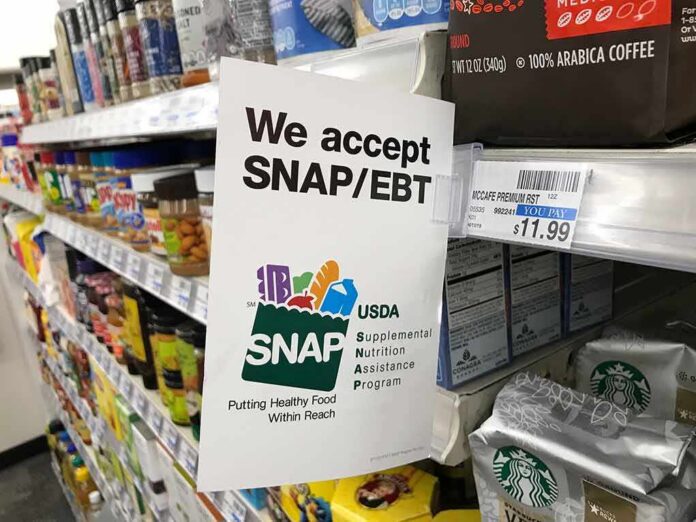
New federal rules that expanded food-stamp work mandates to adults up to age 64 are driving a sharp drop in enrollment that both parties now point to as proof the system is failing millions who still struggle to eat.
Story Highlights
- USDA guidance confirms broader time-limit rules now cover adults ages 18–64 and narrowed exemptions.
- Covered adults must work or join programs 20 hours weekly or face a three-month limit in 36 months.
- Democrats cite multi-million enrollment losses and warn of higher food hardship.
- Maine reports added steps and local caseload drops, raising fairness and access concerns.
What Changed In SNAP And Who Is Now Affected
United States Department of Agriculture guidance shows the One Big Beautiful Bill Act expanded the time-limit group from ages 18–54 to ages 18–64. It also removed or narrowed exemptions, including for some veterans, people facing homelessness, and young adults who aged out of foster care. These are not rumors. They are written into agency instructions to states and caseworkers. The changes expose older working-age adults to limits that did not exist for them before.
Under the time-limit rule, adults in the covered age group must work or be in approved activities at least 20 hours per week, averaged at 80 hours a month. Those who do not meet it can get at most three months of food aid in a 36‑month period unless they qualify for another exemption. This rule is different from general work rules and is stricter. It creates a clock that many people cannot pause if they miss paperwork or hours.
How States Are Implementing The Rules On The Ground
Maine’s public-facing materials list work-related duties like registering for work, answering job-service requests, and not quitting or cutting hours below 30 per week without good cause. State rules add steps, such as keeping an active Maine JobLink account, that can trip up applicants and current users. These steps create an administrative path to loss of aid even when income has not changed. They also raise the chance of missed notices and case closures.
Maine news outlets report sizable local declines since the law took effect, including thousands fewer residents receiving aid. Advocates describe tighter work rules and more proof steps. They also say exemptions for some vulnerable groups were removed. More than half of Maine households on the program include children, older adults, or people with disabilities, so any shock to enrollment cuts close to the bone for many families. These reports match the federal guidance on narrowed exceptions.
What Both Sides Claim About The Enrollment Drop
Democratic lawmakers argue that the expanded mandates and tighter waiver rules reduce help at a time when grocery prices remain high. They cite national data points from independent groups that show millions fewer people on the rolls since mid‑2025. They warn that families losing this help could face more food hardship and risk losing other supports tied to enrollment, such as some child nutrition links. Their claim centers on harm to older workers and parents of teens.
Administration supporters and some Republicans frame the drop as enforcement. They say the law targets able-bodied adults to work or train and trims improper use. The federal documents do confirm stricter eligibility screens and a wider age net. But these documents do not show how many exits were due to fraud, better jobs, or missed steps. The record proves the mechanism for exits; it does not prove the reason for each exit. That gap fuels today’s dispute.
What The Research Says About Work Rules And Real-World Outcomes
Nonpartisan reviews have found a clear pattern: work rules reduce program participation but do not reliably raise employment or earnings among affected adults. That means fewer people get help, yet work outcomes often do not improve in step. When agencies add new steps, many people churn off and on due to paperwork or interviews, not income gains. This mirrors what families report when they struggle to keep up with forms, calls, and proof demands.
For readers across the spectrum, the stakes are simple. If the goal is to reward work, rules must be clear, reachable, and fair. If the goal is to cut waste, leaders must show verified data on error and fraud, not just smaller caseloads. Right now, officials have published the new rules, but not a shared, public ledger that explains who left, why they left, and what happened to them after they left. That is the transparency both sides should demand.
Sources:
thegatewaypundit.com, maine.gov, fna.usda.gov, usda.gov, urban.org, donmoynihan.substack.com
© patriotpostnews.com 2026. All rights reserved.