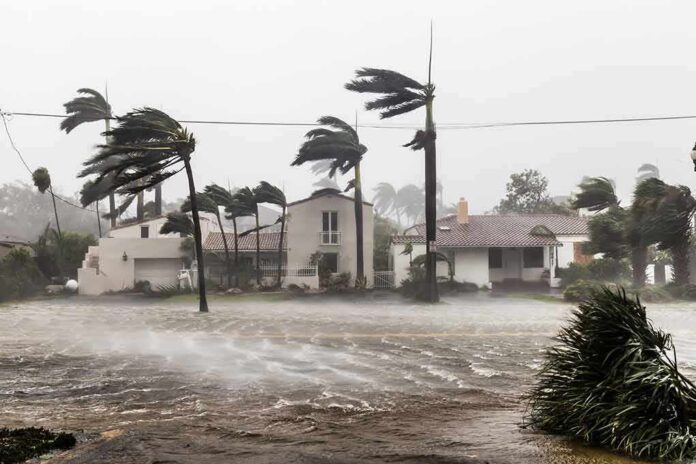
Even after weakening, Tropical Storm Lala knocked out power, flooded roads, and kept life-threatening hazards raging across Hawaii.
Story Highlights
- Officials said Lala held 65 mph winds near Oahu while flooding, debris, and surf dangers persisted.
- National Hurricane Center warned of strong gusts over Maui, Oahu, and Kauai with more rain possible.
- Storm warnings shifted as the system moved west, but hazards remained for several islands.
- Emergency messaging stressed actions for wind, flood, and surf, not just the storm label.
What Officials Reported About Lala’s Strength and Position
Hawaiʻi emergency managers said on Sunday morning that Tropical Storm Lala still carried maximum winds of 65 miles per hour, with its center about 75 miles southwest of Honolulu. The agency warned that dangerous winds were peaking over Molokaʻi, Oʻahu, and Kauaʻi, and urged people to avoid floodwaters and downed lines. That update matched earlier forecasts that impacts would continue even as the storm’s top winds eased from hurricane strength.
The National Hurricane Center’s forecast discussion said tropical-storm-force winds, with gusts near hurricane strength, would persist over Maui County, Oahu, and Kauai County through the day. Forecasters also expected periods of heavy rain to continue for parts of the smaller islands, even as showers tapered on the Big Island. The mix of wind, rain, and surf kept travel risky and power restoration difficult in several areas.
How Warnings Evolved as the Storm Moved West
As Lala tracked westward, the National Hurricane Center adjusted warnings for each county based on the shifting wind field. Advisories showed tropical storm warnings active for Maui County, Oahu, and Kauai County during the day, then removed for some islands as conditions improved. These changes reflected real-time hazards, not a clean “all clear” for the state. Residents away from the storm’s center still faced damaging gusts, large surf, and flooding on low-lying roads.
Hawaii-based weather offices echoed that guidance. The local forecast hub emphasized heavy rainfall, strong winds, dangerous surf, and localized flooding for the weekend, pointing to the range of risks beyond peak wind speed. That approach matched years of emergency practice in the islands, where communication focuses on what people should do about specific hazards in their neighborhood, not only the storm’s category label.
Why “Tropical Storm” Can Still Mean Major Damage
Risk studies show that people tend to relax when a storm is “downgraded,” even if the main threats are still ahead. In Hawaii, emergency and weather agencies push clear messages on hazard, location, timing, and action, because those details drive better choices. That is why officials kept repeating guidance about flooded roads, debris, and downed lines after Lala weakened. The label changed; the danger did not, especially for surf and flooding in narrow valleys.
RESCUERS BECOMING THE RESCUED ON ARRIVAL 🚑🌊
Two Hawaii County paramedics responding to the chaos of Tropical Storm Lala on Saturday ended up having to scramble onto the roof of their own ambulance just to escape rising floodwaters.
Even the professionals taking the shift get…— Maria Mel (@Mariamelx58) August 17, 2026
This event also highlights a broader public concern that many share across politics: systems often fail at the points that matter most to daily life. When roads wash out, the grid goes down, and families cannot get help fast, they feel let down. Clear, steady warnings can reduce harm, but recovery still depends on basics like strong infrastructure, local access routes, and crews that can reach people quickly when the weather finally calms.
Sources:
© patriotpostnews.com 2026. All rights reserved.