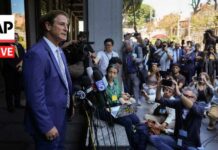
California Governor Gavin Newsom’s tightly controlled “tax return release” is stirring new anger over how the political class plays games with transparency.
Story Snapshot
- Newsom let reporters see four years of tax returns but blocked copying or public posting, triggering backlash.
- The move follows years of broken promises to release returns annually and comes amid federal scrutiny of his circle.
- Critics say the controlled access insults voters’ right to examine powerful leaders’ finances.
- The fight highlights a bigger problem: politicians on both sides writing their own rules for accountability.
What Newsom Released – And How He Controlled It
California Governor Gavin Newsom recently opened four years of tax returns to reporters, but only inside his Sacramento office and under strict rules. Reporters could review 718 pages from tax years 2021 through 2024, yet they were barred from taking photos, making copies, or removing the documents. They were allowed only pen-and-paper notes. Newsom’s office did not provide the returns to the general public online or in print, even though a spokesperson framed the move as a voluntary step “in the interest of transparency.”
Major outlets reported that the returns show Newsom and his wife earning between about $1.7 million and $2 million a year in recent years, largely from wineries, restaurants, and other investments. The couple also paid hundreds of thousands of dollars in taxes and made significant charitable donations, according to those press summaries. But because citizens cannot see the full filings for themselves, they must trust second-hand descriptions from media and the governor’s staff, not their own reading of the documents.
Broken Transparency Promises And Growing Backlash
The controlled release lands on top of a simple, troubling fact: Newsom did not do what he said he would do. As a candidate, he promised to release his tax returns every year he serves in office and called it a “moral duty” for leaders seeking high offices. In practice, he stopped making new returns public after the 2020 tax year, which he only released in 2022 as part of a legally required disclosure for his reelection campaign. For years, Californians had no updated filings, even as questions about his wealth and influence grew.
Criticism has now intensified from watchdog groups and media outlets that see the new release as too little, too late. One ethics advocate called Newsom’s delay “profoundly hypocritical” and said it raises serious questions about what he might be hiding. The California Post and other outlets have slammed the no-copy, invite-only viewing rules as a “bait-and-switch” that lets the governor claim transparency while keeping real scrutiny out of the public’s hands. For many voters on both the left and right, it looks like another example of a powerful official writing his own accountability standards and then ignoring them.
Legal Requirements Versus Public Trust
Newsom’s defense leans heavily on the law. California’s tax transparency statute, Senate Bill 27, which he signed in 2019, requires candidates for governor or president to disclose their five most recent tax returns to appear on the primary ballot. It does not require sitting governors to keep posting new returns every year forever. That narrow rule means Newsom can argue he has gone “beyond what the law requires” by letting reporters see his 2021–2024 filings at all. Legally, he may be in the clear.
But this is exactly where many Americans feel the system is rigged. Ordinary people do not care only about what is technically legal; they care whether leaders honor their word. When a governor pledges annual openness, then hides behind legal minimums and controlled access, it feeds the belief that the rules are designed to protect the powerful, not the public. This pattern is not unique to Newsom. Other politicians have released records only in guarded settings, allowed viewing but not copying, or timed disclosures to help campaigns while leaving long gaps in between.
Federal Scrutiny, 2028 Ambitions, And The Deep-State Mood
The timing of Newsom’s partial release adds more fuel to public suspicion. His office began “preparing” the missing returns as reports surfaced that the Department of Justice was examining financial dealings linked to his wife and close associates. Newsom has claimed those probes are a political hit job ordered by President Trump, but federal officials have not confirmed his version of events. To many people, this looks like the usual pattern: investigations swirl, lawyers get hired, and suddenly the public is asked to accept a curated transparency gesture.
California Gov. Gavin Newsom and his wife made between $1.7 million and $2 million annually from 2022 through 2024, and they paid about half a million a year in federal and state taxes, according to tax returns released by his office. https://t.co/Oa8ePSOnD9
— ABC7 News (@abc7newsbayarea) August 1, 2026
At the same time, Newsom is widely seen as positioning himself for a 2028 presidential run. Releasing four years of returns in a closed room now lets him say he “released” them before entering the national stage, without risking the hard questions that come when millions of eyes can study every schedule and line. For conservatives already angry about elite hypocrisy, and liberals tired of corporate-friendly Democrats, this episode fits a familiar story: the political class protects itself first, and the public gets whatever crumbs of information they choose to drop.
Why This Fight Matters Beyond One Governor
Newsom’s tax return drama taps into a deeper frustration shared by many Americans, regardless of party. People see that lawmakers write disclosure laws with plenty of escape hatches. They promise openness, then deliver controlled access to a few insiders. In this case, reporters could look, but voters could not download or copy anything. That gap between “we’ll be transparent” and “you can only see what we allow, how we allow it” mirrors wider concerns about secretive agencies, backroom deals, and a “deep state” that never faces real sunlight.
Whether one likes or dislikes Newsom’s politics, the key issue is bigger than one Democrat governor. When politicians set moral standards for transparency and then quietly walk them back, they weaken trust in every institution they touch. Both critics and defenders agree on the basic facts: four years of returns were shown, but only in a controlled setting, and the public still cannot examine them directly. That uneasy middle ground—technically open, practically hidden—is exactly where many Americans feel the system has stopped working for them.
Sources:
nypost.com, kcra.com, latimes.com, independent.co.uk, freebeacon.com, calmatters.org, fox56.com, timesnownews.com
© patriotpostnews.com 2026. All rights reserved.